




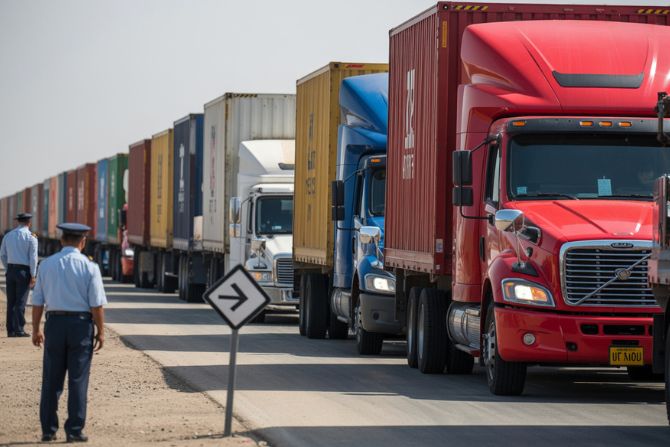
Navigating the complexities of US-Mexico shipping is more critical than ever for manufacturers, exporters, and logistics professionals. In 2026, the USMCA joint review, changing tariff policies, tighter border controls, capacity constraints, and cargo security risks are reshaping cross-border supply chains. This guide explores the top seven US-Mexico shipping challenges and provides practical strategies to help your business remain competitive, resilient, and compliant.
Table of Contents
- Tariffs and Trade Policy Uncertainty
- Infrastructure Bottlenecks and Capacity Constraints
- Customs Complexity and Regulatory Compliance
- Supply Chain Disruptions and Geopolitical Risks
- Rising Costs and Rate Volatility
- Limited Innovation and Digital Transformation
- Border Security and Cargo Theft
- Building a Resilient US-Mexico Shipping Strategy
- FAQs
- Conclusion
Tariffs and Trade Policy Uncertainty
In 2026, trade policy uncertainty remains one of the most significant challenges affecting US-Mexico shipping. The USMCA joint review has placed renewed attention on rules of origin, steel and aluminum, automotive trade, labor, agriculture, and economic security. For shippers, even the possibility of new tariffs or changes in enforcement can affect sourcing decisions, landed costs, production planning, and long-term contracts.
How to Overcome:
- Confirm USMCA eligibility: Review rules of origin, supplier certifications, tariff classifications, and record-keeping requirements before claiming preferential treatment under the USMCA.
- Model different landed-cost scenarios: Calculate how potential duties, fees, or sourcing changes could affect your margins before committing to a route or supplier.
- Monitor official developments: Follow the USMCA joint review and bilateral trade discussions that could affect steel, aluminum, automotive, and other strategic industries.
- Coordinate logistics and customs planning: Work with experienced cross-border partners to evaluate how policy changes may affect documentation, routing, and delivery schedules.
Infrastructure Bottlenecks and Capacity Constraints
US-Mexico trade depends heavily on trucking, which makes border infrastructure and carrier capacity critical. Congestion at busy ports of entry, equipment imbalances, limited appointment availability, and tighter requirements for drivers operating across the border can reduce available capacity and create unpredictable transit times. Northbound lanes from major manufacturing regions may become especially tight when export demand rises.
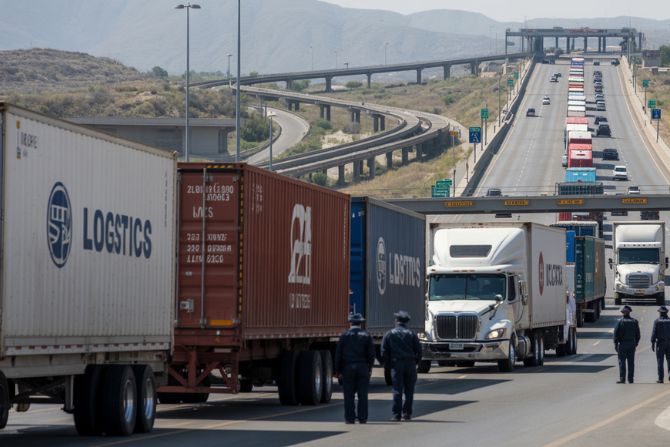
Long delays and bottlenecks at border crossings remain a major challenge for US-Mexico shipping as infrastructure and carrier capacity struggle to keep pace with trade volume.
What You Can Do:
- Build flexibility into routing: Evaluate alternative ports of entry and use multimodal transportation when rail, intermodal, or transloading can reduce dependence on a single corridor.
- Plan capacity in advance: Share reliable forecasts with carriers and secure space early for high-volume or time-sensitive lanes.
- Improve loading conditions: Accurate shipment details, realistic appointments, efficient loading, and reduced detention make freight more attractive to reliable carriers.
- Use strategic border facilities: Cross-docking, transloading, and warehousing near the border can help manage equipment changes, inventory, and unexpected delays.
At the ILS Company we help our clients navigate capacity constraints through flexible route planning, carrier coordination, and scalable warehousing and distribution support.
Customs Complexity and Regulatory Compliance
Cross-border shipping between the US and Mexico requires accurate coordination among shippers, carriers, customs brokers, and consignees. Errors in tariff classification, valuation, country of origin, permits, or shipment documentation can lead to inspections, holds, penalties, and missed delivery appointments. In 2026, closer scrutiny of cargo information, declared values, weight, and securement makes clean documentation even more important.
How to Navigate It:
- Validate documentation before pickup: Confirm invoices, packing lists, certificates, permits, and shipment instructions before the truck reaches the border.
- Standardize product data: Maintain consistent descriptions, classifications, origin records, and values across internal systems and customs documents.
- Digitize information exchange: Use electronic data interchange (EDI) and connected logistics platforms to reduce manual errors and accelerate communication.
- Stay current with regulations: Review changes in customs procedures, certifications, and import-export requirements on both sides of the border.
- Coordinate with customs experts: Align your logistics provider and customs broker early, especially for regulated, high-value, or time-sensitive cargo.
Preparation and consistent data are essential for avoiding preventable clearance delays and keeping cross-border freight moving.
Supply Chain Disruptions and Geopolitical Risks
Global instability like Iran’s war, changing trade policies, extreme weather, labor disruptions, and sudden border restrictions continue to test US-Mexico supply chains. Nearshoring has increased the strategic importance of the corridor, but it has also concentrated more production and transportation demand in key industrial regions. A disruption affecting one supplier, crossing, or route can quickly create consequences across an integrated North American operation.
How to Stay Resilient:
- Diversify suppliers and routes: Build redundancy by qualifying alternate vendors, carriers, border crossings, and transportation modes.
- Prioritize critical inventory: Use targeted safety stock for components that could stop production or affect important customers.
- Create disruption protocols: Define who makes routing, inventory, customer communication, and escalation decisions when conditions change.
- Improve end-to-end visibility: Monitor milestones from pickup through customs clearance and final delivery so your team can react before a delay becomes a crisis.
Here at the ILS Company you can count on resilient supply chains through multimodal logistics solutions, proactive coordination, and shipment visibility across the US-Mexico corridor.
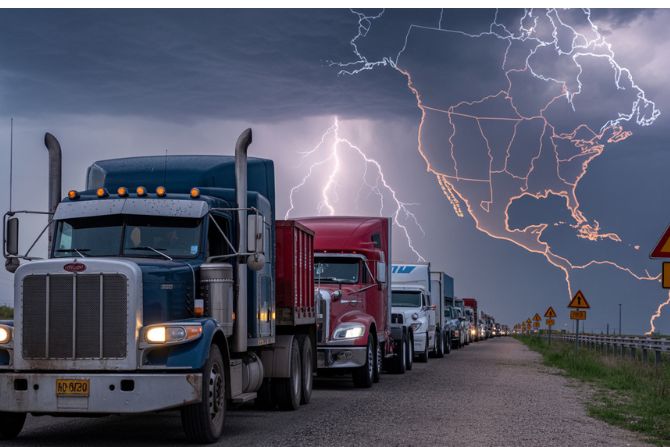
Political uncertainty, severe weather, and transportation disruptions can affect cross-border delivery schedules with little warning.
Rising Costs and Rate Volatility
Freight rates alone do not show the full cost of cross-border logistics. Fuel prices, capacity imbalances, detention, border transfers, inspections, storage, insurance, and customs-related delays can all affect the final landed cost. A low initial quote may become expensive when service failures interrupt production or create expedited-shipping needs.
Smart Ways to Adapt:
- Compare total landed cost: Evaluate accessorial charges, border services, transit reliability, and potential disruption costs instead of selecting a provider by linehaul rate alone.
- Use a balanced procurement strategy: Combine contracted capacity on core lanes with spot-market flexibility for changing or seasonal demand.
- Reduce avoidable charges: Improve appointment planning, documentation readiness, loading times, and communication to limit detention and rework.
- Consolidate when practical: Combine compatible shipments and optimize load utilization to reduce transportation cost per unit.
An experienced logistics partner can help identify hidden costs, compare routing alternatives, and build a transportation strategy around reliability as well as price.
Limited Innovation and Digital Transformation
Manual processes remain common across cross-border logistics. Disconnected spreadsheets, emails, and legacy systems make it difficult to confirm shipment status, identify exceptions, and coordinate decisions among teams in two countries. Poor data quality can also limit the value of automation and create inconsistencies in customs clearance documentation.

Balancing human expertise with automation is key to modernizing cross-border logistics between the US-Mexico Shipping
How to Break the Bottleneck:
- Connect core platforms: Integrate TMS, WMS, ERP, and customer systems so teams can work from consistent shipment and inventory data.
- Automate repetitive updates: Use alerts, milestone notifications, and exception workflows to reduce manual follow-up.
- Apply AI selectively: Use predictive tools for demand forecasting, route evaluation, anomaly detection, and scenario planning while maintaining human oversight.
- Prioritize data quality and training: Standardize data entry and train your team so new tools improve operations rather than add another disconnected layer.
Digital transformation is most effective when technology supports a clear operational process and faster decision-making.
Border Security and Cargo Theft
Cargo security remains a serious concern in US-Mexico shipping. Electronics, automotive parts, consumer products, food and beverage shipments, and other valuable goods may be targeted in high-risk corridors, during unauthorized stops, or while cargo is waiting at unsecured facilities. Theft can create direct financial losses, insurance complications, production delays, and reputational damage.
How to Minimize the Risk:
- Use real-time tracking and alerts: GPS, geofencing, and route-deviation notifications allow teams to identify unusual activity quickly.
- Plan secure routes and stops: Avoid unnecessary stops, identify approved facilities, and account for high-risk areas when setting schedules.
- Vet carriers and facilities: Review security procedures, driver verification, access controls, and incident-response capabilities.
- Control sensitive information: Limit access to shipment values, routes, and schedules to the people who need them.
- Confirm insurance requirements: Ensure coverage aligns with the cargo value, commodity, route, and contractual responsibilities.
At the ILS Company we emphasize a lot on cargo visibility, careful carrier coordination, and proactive communication to help clients reduce exposure across the border.

Turning visibility into strategy: Modern logistics teams managing US-Mexico cross-border operations in real time.
Building a Resilient US-Mexico Shipping Strategy
The landscape of US-Mexico shipping is evolving rapidly. Tariff uncertainty, capacity constraints, customs requirements, supply chain disruptions, cost volatility, disconnected technology, and cargo security cannot be managed in isolation. The strongest cross-border strategies connect transportation, compliance, inventory, security, and contingency planning.
Key Takeaways:
- Stay proactive: Monitor tariff policy, customs requirements, and USMCA developments.
- Improve shipment readiness: Accurate documents, reliable forecasts, and efficient loading help prevent delays and secure capacity.
- Diversify routes and resources: Resilience comes from having qualified alternatives before a disruption occurs.
- Use technology with purpose: Prioritize visibility, exception management, and consistent data across every participant.
- Choose experienced partners: Work with logistics providers that understand transportation and operational coordination on both sides of the border.
By anticipating the most important risks and building practical response plans, businesses can protect continuity and create a stronger foundation for long-term growth across North America
FAQs About US-Mexico Shipping in 2026
1. What are the biggest challenges in US-Mexico shipping right now?
The main challenges include trade policy uncertainty, border and carrier capacity constraints, customs complexity, supply chain disruptions, cost volatility, disconnected technology, and cargo theft. Each can affect delivery times, landed costs, or compliance if it is not addressed proactively.
2. How can I reduce delays at the US-Mexico border?
Validate documents before pickup, provide accurate cargo information, coordinate early with your customs broker and logistics provider, and build realistic time into border transfers and inspections. Consistent shipment data and alternative routing plans can also reduce preventable delays.
3. How is the 2026 USMCA review affecting cross-border shipping?
The joint review is increasing attention on rules of origin, tariffs, steel and aluminum, automotive trade, labor, agriculture, and economic security. Even before any formal change takes effect, uncertainty can influence sourcing, contracts, compliance reviews, and logistics planning.
4. What technologies are improving cross-border logistics?
Transportation Management Systems (TMS), Warehouse Management Systems (WMS), electronic data interchange (EDI), real-time GPS tracking, geofencing, automated milestone alerts, and AI-supported forecasting can improve visibility and decision-making.
5. How can I reduce cargo theft risk in US-Mexico shipping?
Use GPS tracking and geofencing, plan secure routes and stops, vet carriers, control access to sensitive shipment information, maintain clear incident protocols, and confirm that insurance coverage matches the cargo and route.
6. What should I look for in a cross-border logistics provider?
Look for US-Mexico experience, reliable carrier and facility networks, multilingual coordination, strong shipment visibility, security procedures, and the ability to support transportation, warehousing, and contingency planning as your needs change.
7. What is the outlook for US-Mexico shipping over the next 12 months?
Cross-border demand should remain strategically important as North American supply chains continue to integrate. However, trade policy uncertainty, tighter operating controls, and capacity imbalances mean businesses should prioritize flexibility, accurate documentation, security, and reliable logistics partnerships.
Conclusion: Turn Cross-Border Challenges into Strategic Advantages
US-Mexico shipping in 2026 presents significant challenges, but it also offers major opportunities for businesses that prepare for change. The companies best positioned to succeed will be those that connect trade compliance, transportation planning, shipment visibility, cargo security, and contingency strategies.
By improving documentation, planning capacity early, monitoring regulatory developments, and working with experienced logistics professionals, you can reduce avoidable delays and build a more resilient cross-border supply chain.
Do not wait for the next disruption to expose a weak point.
Contact The ILS Company today for customized logistics solutions that simplify US-Mexico shipping and support your growth across North America.