




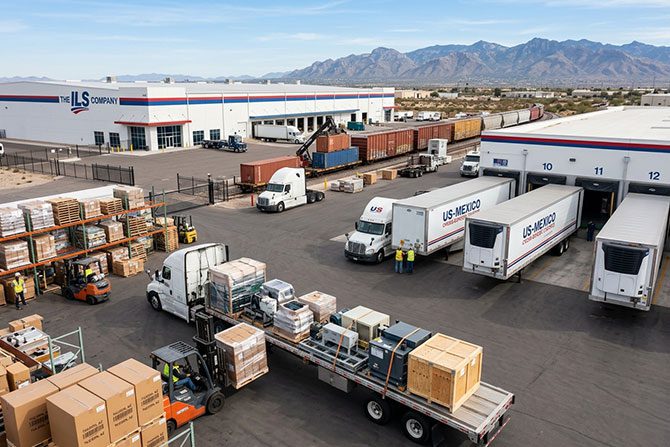
Tucson warehousing has become a strategic logistics solution for companies transporting goods between the United States and Mexico.
As cross-border trade becomes more complex due to tighter customs enforcement and compliance requirements, shifting tariffs, and growing demand for faster delivery, businesses are rethinking their freight management strategies.
Warehousing operations in Tucson now play a critical role in improving efficiency, reducing delays, ensuring compliance, and providing greater control over cross-border freight movement.
For companies operating in the U.S.–Mexico corridor, the challenge is not just transportation, but also coordination, flexibility, and visibility.
This article explores how Tucson warehousing solutions help businesses streamline cross-border logistics, reduce risk, and optimize freight movement in a rapidly changing trade environment.
Table of Contents
- Why Tucson Warehousing Matters for U.S.-Mexico Logistics
- How Transloading Supports Tucson Warehousing
- The Role of Tucson Warehousing in Cross-Border Freight
- Customs Challenges in U.S.–Mexico Trade
- How Tucson Warehousing Improves Efficiency and Compliance
- The Role of a Logistics Partner in Cross-Border Freight
- FAQs
- Conclusion
Why Tucson Warehousing Matters for U.S.-Mexico Logistics
Tucson warehousing has become increasingly important for companies transporting goods between the United States and Mexico.
Its proximity to key border crossings, access to major highways and rail networks, and expanding logistics infrastructure make it an ideal staging point for cross-border operations.
Compared to more congested border cities, Tucson offers greater operational flexibility.
Freight can be staged, inspected, consolidated, stored temporarily, or redirected before reaching the border. This helps companies reduce delays and improve coordination.
For businesses handling high-volume, time-sensitive, or compliance-sensitive shipments, this flexibility is critical.
Logistics efficiency is no longer defined by speed alone; it is defined by control. Tucson warehousing enables companies to manage that control more effectively before their freight enters one of the most complex trade corridors in North America.
How Transloading Supports Tucson Warehousing
Transloading is not the main focus of every warehousing strategy, it can play an important supporting role in cross-border logistics.
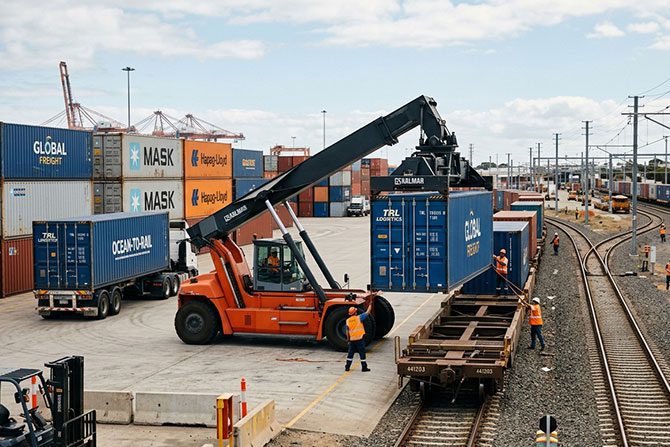
Transloading can support warehousing by helping freight move efficiently between carriers, equipment, and cross-border routes.
In logistics, transloading refers to the process of transferring freight from one mode of transportation to another—for example, from rail to truck or from long-haul trucking to cross-border carriers.
In the context of U.S.–Mexico trade, transloading can help companies adapt shipments to different carrier networks, equipment requirements, and border-crossing strategies.
Since trucking regulations, equipment standards, and carrier operations differ between the United States and Mexico, shipments do not always move seamlessly from origin to final destination using the same equipment.
This is where Tucson warehousing can work together with transloading.
Instead of sending freight directly across the border, companies can use a Tucson facility to:
- stage freight before scheduled border crossings,
- transfer cargo into the appropriate equipment,
- consolidate or separate shipments based on destination,
- inspect freight before customs review,
- prepare cargo for final delivery on either side of the border.
This added flexibility helps companies reduce delays, avoid equipment mismatches, and respond more quickly to documentation or customs clearance issues.
In other words, transloading does not replace warehousing; it is an additional service that makes Tucson warehousing more valuable for cross-border freight.
The Role of Tucson Warehousing in Cross-Border Freight
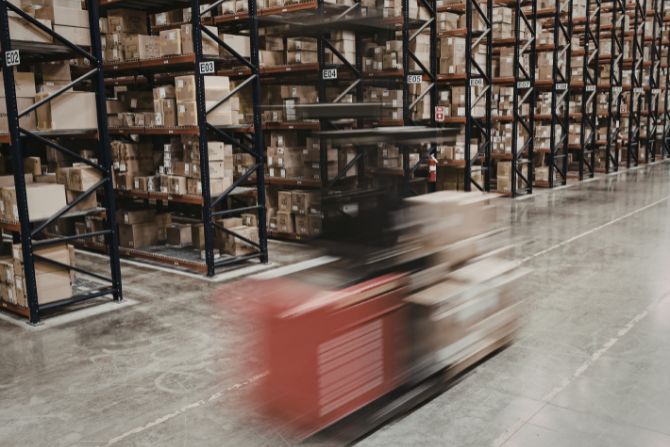
Tucson warehousing operations provide flexibility and control before freight reaches the U.S.–Mexico border.
Tucson warehousing plays a much bigger role in cross-border logistics than just storing goods.
In the U.S.–Mexico corridor, warehouses function as control points — places where freight can be organized, adjusted, and prepared before crossing the border.
Facilities in Tucson are especially valuable because they allow companies to manage shipments in a flexible, controlled environment before reaching the border.
Instead of relying solely on direct, point-to-point transportation, businesses can use Tucson warehousing to:
- stage freight ahead of scheduled crossings,
- consolidate multiple shipments into fewer loads,
- break down large shipments for more efficient distribution,
- verify documentation and labeling before customs review,
- hold inventory temporarily when timing or clearance issues arise.
This flexibility is critical in a trade environment where delays, inspections, and documentation issues are common.
Warehousing also helps companies avoid one of the biggest risks in cross-border logistics: timing mismatches.
A shipment that arrives too early, too late, or without the correct documentation can quickly create bottlenecks. Having a controlled storage point enables businesses to make adjustments in real time instead of reacting under pressure at the border.
Tucson warehousing is no longer just about space; it’s about coordination, visibility, and control across the entire supply chain.
Customs Challenges in U.S.–Mexico Trade
Customs is still one of the most complex and unpredictable aspects of freight movement between the United States and Mexico.
Increased enforcement, stricter documentation requirements, and greater scrutiny of cross-border shipments in 2026 have made compliance more critical than ever.
For many businesses, the issue is not just tariffs or duties but also the operational risk that comes with customs delays.
Common challenges include:
- incomplete or inconsistent documentation,
- incorrect product classification (HTS codes),
- discrepancies between commercial invoices and shipment contents,
- last-minute regulatory changes or enforcement shifts,
- limited visibility into clearance status.
Even small errors can lead to significant delays.
A shipment held at the border for inspection or correction can disrupt production schedules, delay customer deliveries, and increase overall logistics costs.
Another key challenge is coordination.
Customs processes require alignment between multiple parties, including suppliers, carriers, brokers, warehouse teams, and regulatory authorities. When communication breaks down at any point, the risk of delay increases.
This is why many companies struggle with cross-border freight, even when transportation itself is well organized.
In today’s environment, success depends on not only moving freight efficiently but also managing compliance proactively.
Without the right systems and coordination, customs becomes a bottleneck rather than a checkpoint.
How Tucson Warehousing Improves Efficiency and Compliance
Tucson Warehousing offers a practical solution for reducing friction in cross-border logistics.
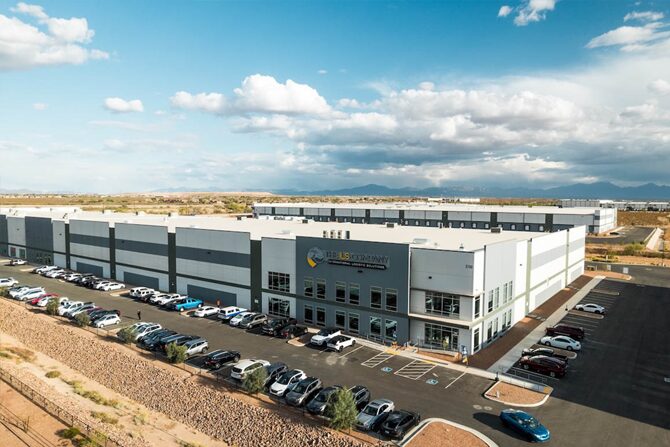
At ILS, we help you overcome these issues through advanced warehousing, distribution, and inventory control solutions, all from our new strategic location in Tucson, Arizona.
By handling freight before it reaches the border, companies can proactively resolve issues instead of reacting under pressure.
This approach improves efficiency and compliance by enabling businesses to:
- verify documentation before customs submission,
- align shipment details with regulatory requirements,
- adjust loads based on carrier or equipment needs,
- reduce wait times at congested border crossings,
- maintain better visibility over freight status.
Rather than treating customs as a final step, Tucson Warehousing integrates it into a more controlled process.
This reduces uncertainty and helps companies avoid costly disruptions that often occur at the border.
Logistics providers with cross-border expertise play a key role in making this work.
Companies like us, The ILS Company, support businesses by coordinating warehousing, freight handling, transloading when needed, and customs preparation in a single integrated workflow. This allows clients to identify potential issues earlier, improve compliance accuracy, and keep freight moving without unnecessary delays.
Efficiency is not just about moving faster; it’s about reducing friction at every stage of the process.
The Role of a Logistics Partner in Cross-Border Freight
Execution alone is no longer enough in cross-border logistics.
Shipments between the United States and Mexico require coordination across multiple touchpoints, including carriers, warehouses, customs brokers, and regulatory authorities. Without proper coordination, even well-planned shipments may be delayed.
A reliable logistics partner can help coordinate these efforts.
Beyond transportation, the right partner provides the following:
- visibility across the entire shipment lifecycle,
- support with documentation and compliance requirements,
- coordination between U.S. and Mexico operations,
- access to warehousing options that improve timing and flexibility,
- proactive identification of potential risks.
This becomes especially important in environments where timing, documentation, and regulatory accuracy must all align perfectly.
This is especially important in environments where timing, documentation, and regulatory accuracy must align perfectly.
Companies that rely solely on fragmented providers often struggle with communication gaps and reactive problem-solving.
In contrast, working with an integrated logistics partner enables businesses to manage cross-border freight more strategically, reducing uncertainty and improving overall performance.
The difference between delays and efficiency often comes down to how well logistics are coordinated behind the scenes.
FAQs
What is Tucson warehousing used for in cross-border logistics?
Tucson warehousing is used to stage, store, consolidate, inspect, and prepare freight for movement across the U.S.–Mexico border.
Why is Tucson a strategic location for warehousing?
It offers proximity to major border crossings and access to key highways and rail networks. It also has less congestion than many traditional border cities, making it an ideal location for managing cross-border freight.
How does Tucson warehousing help with customs clearance?
It allows companies to verify documentation, adjust shipments, review labeling, and resolve potential issues before freight reaches the border, reducing the risk of delays.
Is transloading the same as warehousing?
No, because warehousing focuses on storing, staging, and managing freight, while transloading involves transferring freight between transportation modes or equipment. In many cross-border operations, both services work together.
Do all cross-border shipments require warehousing?
While not all shipments require warehousing, it can be highly valuable when companies need better timing, compliance control, consolidation, or flexibility before crossing the border.
Conclusion
U.S.–Mexico trade continues to grow in both volume and complexity.
In this environment, success depends on more than transportation; it also depends on coordination, preparation, and control.
Tucson warehousing provides businesses with a practical way to manage these challenges. By handling freight before it reaches the border, companies can improve efficiency, reduce delays, strengthen compliance, and create more predictable cross-border operations.
Services like transloading can further support this strategy by helping freight move between carriers, equipment, and delivery networks more efficiently when needed.
For organizations moving goods across the U.S.–Mexico border, the goal is not just to transport freight but to do so with greater predictability and resilience.
Logistics is not just about getting shipments from point A to point B; it’s about ensuring that every step in between is aligned, optimized, and prepared for the realities of cross-border trade.