




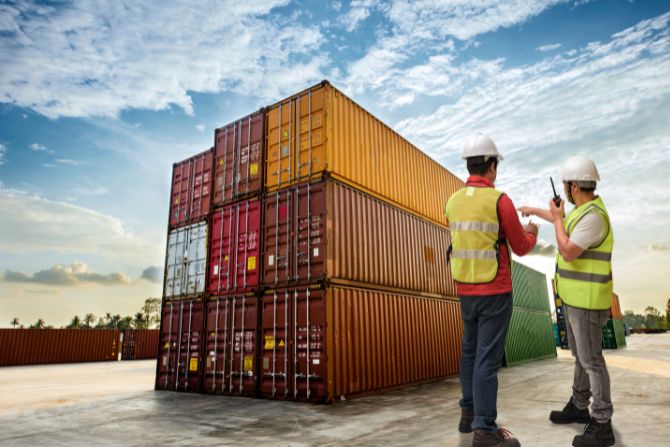
Incoterms for US Mexico trade play a critical role in cross-border logistics, yet they remain one of the most misunderstood parts of international freight planning.
For companies moving goods between the United States and Mexico, Incoterms help define who is responsible for transportation, customs clearance, freight costs, insurance, and risk at different points in the shipment process.
For a broader overview of all international commercial terms, visit our complete Incoterms guide. This article focuses specifically on how Incoterms apply to U.S.–Mexico trade, cross-border freight, customs coordination, and logistics operations in 2026.
As cross-border logistics becomes more complex due to tighter customs enforcement, tariff exposure, supply chain pressure, and evolving trade requirements, choosing the right Incoterm is no longer just a contractual detail. It is a strategic logistics decision.
The wrong Incoterm can create confusion around freight ownership, customs responsibilities, cargo insurance, documentation, and unexpected transportation costs.
This guide explains how Incoterms work in U.S.–Mexico trade, which terms are most commonly used in cross-border freight, and what companies should consider before moving cargo between both countries.
Table of Contents
- What Are Incoterms in US-Mexico Trade?
- Why Incoterms for US Mexico Trade Matter in 2026
- The Most Common Incoterms Used in Cross-Border Freight
- Incoterms Chart for US-Mexico Trade: Key Differences Between EXW, FCA, FOB, CIF, and DDP
- How Incoterms Affect Customs and Logistics Operations
- Common Mistakes Businesses Make with Incoterms
- Choosing the Right Incoterm for Your Business
- The Role of a Logistics Partner in Managing Incoterms
- FAQs
- Conclusion
What Are Incoterms in US-Mexico Trade?
Incoterms, short for International Commercial Terms, are standardized trade rules published by the International Chamber of Commerce. They define the responsibilities of buyers and sellers in international shipments.
In practical terms, Incoterms help clarify the following:
- who arranges transportation,
- who pays freight costs,
- who handles cargo insurance,
- who manages customs clearance,
- where risk transfers from seller to buyer,
- who is responsible if delays, damages, or documentation issues occur.
Incoterms create a common language for global trade. Without them, companies operating across borders could face disputes over transportation costs, cargo damage, customs procedures, or delivery delays.
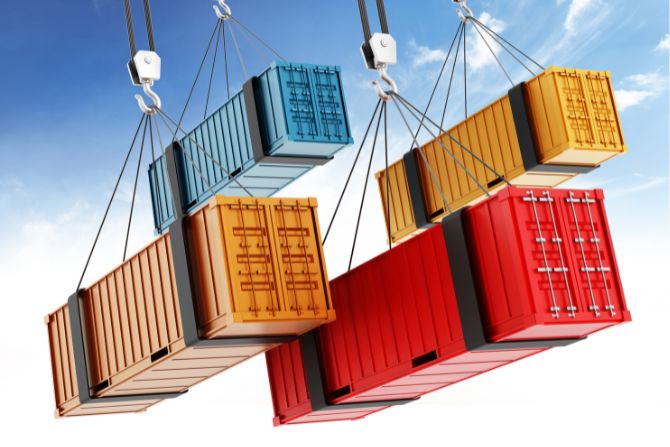
Incoterms define how responsibilities and risk are transferred throughout international cargo transportation.
Although Incoterms do not replace commercial contracts, they help establish clear expectations between trading partners and reduce uncertainty throughout the shipping process.
In U.S.–Mexico trade, this clarity is especially important because shipments often involve multiple carriers, customs brokers, warehouses, cross-border transfers, inspection points, and delivery handoffs.
Why Incoterms for US-Mexico Trade Matter in 2026
In cross-border logistics, misunderstandings around responsibility can quickly become expensive.
This is why Incoterms for US-Mexico trade are especially important in 2026. Cross-border shipments often involve transportation providers on both sides of the border, customs checkpoints, warehousing, brokers, drayage coordination, and multiple documentation requirements.
Incoterms establish who is responsible for each stage of the shipment, including:
- freight coordination,
- export customs clearance,
- import customs clearance,
- transportation costs,
- cargo insurance,
- delivery obligations,
- risk during transit.
Without clearly defined terms, businesses can face unexpected charges, customs delays, or disputes over damaged cargo and missed deliveries.
In 2026, these risks are even more relevant because companies operating between the United States and Mexico must manage tighter customs controls, tariff uncertainty, documentation accuracy, and increased pressure to maintain predictable supply chains.
For example, a shipment moving under EXW creates very different responsibilities than one moving under DDP.
Under EXW, the buyer assumes most transportation and customs responsibilities very early in the process. Under DDP, the seller carries much greater responsibility for delivery, duties, and customs coordination.
Choosing the wrong Incoterm can create operational friction, increase landed costs, and expose businesses to avoidable compliance issues.
In cross-border freight, Incoterms are not just legal definitions. They directly shape how logistics operations function in real-world conditions.
The Most Common Incoterms Used in Cross-Border Freight
There are 11 Incoterms under the current Incoterms® 2020 rules. However, not all of them are equally relevant for every mode of transportation.
For U.S.–Mexico trade, companies commonly deal with terms such as EXW, FCA, FOB, CIF, and DDP. Each one affects transportation responsibility, customs coordination, risk allocation, and logistics strategy in a different way.
It is also important to understand that some Incoterms, such as FOB and CIF, are designed for ocean or inland waterway transport. They may still appear in U.S.–Mexico trade when shipments are connected to ports, but they are not always the best fit for pure cross-border trucking operations.
EXW Incoterms
EXW, or Ex Works, places the least responsibility on the seller.
Under EXW, the seller makes the goods available at their facility, and the buyer assumes responsibility for most of the shipping process.
This may include:
- pickup coordination,
- export documentation,
- main transportation,
- customs clearance,
- insurance,
- final delivery.
Although EXW may appear simple, it can create operational challenges in cross-border trade because the buyer may have limited control over export procedures in the seller’s country.
For U.S.–Mexico shipments, EXW should be used carefully. If the buyer does not have strong local coordination, customs broker support, or transportation visibility, delays and documentation problems can occur.
FCA Incoterms
FCA, or Free Carrier, is often more practical than EXW for international shipments.
Under FCA, the seller is responsible for export clearance and delivery to a specified carrier or location. After that point, the buyer manages the main transportation and additional logistics responsibilities.
In U.S.–Mexico logistics, FCA can create better operational alignment because it clearly assigns export responsibility to the seller while giving the buyer more control over the transportation strategy.
For many cross-border trucking operations, FCA is often a more balanced option than EXW because it reduces confusion around export documentation and handoff responsibility.
FOB Incoterms
FOB, or Free on Board, is primarily used for ocean and inland waterway freight.
Under FOB, the seller is responsible until the cargo is loaded onto the vessel. Once the goods are on board, risk transfers to the buyer.
Although FOB is commonly used in international trade, it is often misunderstood in cross-border trucking. For shipments moving only by truck between the United States and Mexico, FCA is usually more operationally appropriate than FOB.
However, FOB may still appear in U.S.–Mexico trade when shipments are connected to containerized ocean freight, ports, or international procurement operations.
CIF Incoterms
CIF, or Cost, Insurance, and Freight, is also designed for ocean and inland waterway transport.
Under CIF, the seller pays for the cost of freight and minimum insurance coverage to the destination port. However, the transfer of risk occurs once the cargo is loaded on board the vessel at the port of shipment.
This distinction matters because many businesses assume risk transfers at the destination port, but that is not how CIF works.
CIF can be useful in global procurement operations involving overseas suppliers, but it is not typically the best fit for pure U.S.–Mexico cross-border trucking.
DDP Incoterms
DDP, or Delivered Duty Paid, places the greatest responsibility on the seller.
Under DDP, the seller manages transportation, duties, customs clearance, and final delivery to the buyer’s destination.
For buyers, DDP can feel convenient because many logistics responsibilities are handled by the seller. However, for sellers, DDP creates significant compliance, customs, and cost responsibilities.
In U.S.–Mexico trade, DDP should be used carefully. The seller must understand import requirements, duties, taxes, documentation, and whether they can legally and operationally act as the responsible party in the destination country.
DDP Incoterms can simplify the process for the buyer, but they can also increase risk for the seller if customs responsibilities are not clearly managed.
Incoterms Chart for US-Mexico Trade: Key Differences Between EXW, FCA, FOB, CIF, and DDP
The following Incoterms chart summarizes the most important operational differences between EXW, FCA, FOB, CIF, and DDP in the context of U.S.–Mexico trade and cross-border freight.
| Incoterm | Best Fit | Main Transportation Responsibility | Customs Responsibility | Risk Transfer Point |
|---|---|---|---|---|
| EXW | Buyer-controlled shipments with strong local coordination | Mostly buyer | Mostly buyer | At seller’s facility |
| FCA | Cross-border trucking and multimodal freight | Shared | The seller handles export clearance; the buyer manages the next stages | When cargo is delivered to the named carrier or place |
| FOB | Ocean or inland waterway freight | Seller until the cargo is loaded on the vessel | Shared depending on the shipment structure | Once cargo is on board the vessel |
| CIF | Ocean freight is connected to ports | Seller pays ocean freight and minimum insurance to the destination port | The buyer handles import clearance | Once cargo is on board the vessel at the origin port |
| DDP | Seller-managed delivery with full customs responsibility | Seller | The seller handles duties, taxes, customs, and delivery obligations | At the named destination, usually before unloading, unless otherwise agreed |
One of the biggest misconceptions businesses make is assuming that Incoterms only affect freight costs.
In reality, they also determine:
- who manages customs procedures,
- who assumes liability during transit,
- who coordinates transportation providers,
- who prepares or controls key documentation,
- who absorbs unexpected delays or additional charges.
For example, choosing DDP may simplify the process for the buyer, but it places significant customs and compliance responsibility on the seller.
On the other hand, EXW minimizes responsibility for the seller, but it can create operational complexity for the buyer, especially in international shipments where export procedures require local coordination.
In cross-border logistics, the most effective Incoterm is not always the cheapest option. It is the one that creates the clearest operational structure for both parties involved.
How Incoterms Affect Customs and Logistics Operations

Incoterms directly influence customs coordination, transportation responsibilities, and freight visibility across the supply chain.
Incoterms do more than define delivery terms. They directly shape how customs and logistics operations are managed throughout the shipment lifecycle.
Every Incoterm influences:
- who prepares shipping documentation,
- who coordinates customs clearance,
- who assumes transportation risk,
- who pays duties, taxes, and freight costs,
- who controls the shipment at different stages of transit.
In U.S.–Mexico trade, these responsibilities are especially important because cross-border shipments often involve multiple carriers, customs brokers, warehouses, and handoff points.
When Incoterms are not aligned with the actual logistics process, operational problems can emerge quickly.
For example, companies may experience:
- delays caused by missing customs documentation,
- confusion around carrier coordination,
- disputes over unexpected charges,
- shipment holds due to unclear responsibility,
- limited visibility during critical border-crossing stages.
Incoterms also influence visibility and control.
A company operating under EXW may have limited oversight during early export stages, while a company operating under DDP assumes far greater responsibility throughout the shipment process.
The operational impact becomes even more significant when customs inspections, tariff exposure, or regulatory changes affect the movement of freight.
In 2026, successful cross-border logistics depend not only on transportation capacity but on how clearly operational responsibilities are defined from the start.
Common Mistakes Businesses Make with Incoterms
Many companies use Incoterms without fully understanding how they affect day-to-day logistics operations.
In some cases, businesses simply repeat the same terms they have always used without evaluating whether those terms still make sense for their current supply chain structure.
This can create unnecessary costs, delays, documentation problems, and compliance risks.
Some of the most common mistakes include:
Choosing Incoterms Based Only on Cost
Businesses often select terms that appear cheaper upfront without considering the operational responsibilities attached to them.
A lower transportation cost can quickly become more expensive if customs coordination, documentation, insurance, or delivery responsibilities are unclear.
Using EXW Without Local Export Coordination
EXW is frequently misunderstood.
While it minimizes seller responsibility, it can create serious complications when the buyer lacks operational control in the seller’s country, particularly regarding export documentation, pickup scheduling, and customs coordination.
For U.S.–Mexico freight, companies should be especially careful when using EXW without a reliable logistics partner or customs broker network.
Assuming DDP Eliminates All Risk
DDP may simplify the buying process, but it places substantial customs and compliance responsibility on the seller.
If the seller lacks strong customs expertise in the destination country, delays and unexpected costs can increase significantly.
DDP does not eliminate risk. It simply shifts a large portion of the responsibility to the seller.
Failing to Align Incoterms With Logistics Strategy
Incoterms should support how the shipment actually moves.
A mismatch between contractual terms and operational reality often creates confusion between carriers, brokers, warehouses, customers, and internal teams.
For example, using an ocean-focused Incoterm for a truck-only shipment may create unnecessary confusion around risk transfer and responsibility.
Ignoring Customs and Regulatory Implications
Incoterms directly influence who is responsible for customs clearance, duties, and documentation accuracy.
In cross-border trade, these responsibilities must be clearly understood to avoid delays and compliance issues.
In 2026, where customs scrutiny and operational pressure continue to increase, businesses can no longer treat Incoterms as simple contract language.
They are a core part of supply chain planning and logistics execution.

Efficient logistics coordination and well-defined Incoterms help keep international freight moving smoothly across borders.
Choosing the Right Incoterm for Your Business
There is no single Incoterm that works best for every business.
The right choice depends on several operational factors, including:
- the company’s logistics capabilities,
- customs expertise,
- transportation network,
- risk tolerance,
- cargo value,
- shipment urgency,
- level of supply chain visibility required.
Businesses with strong international logistics infrastructure may prefer terms that provide greater transportation control, while companies with limited cross-border experience may benefit from terms that simplify coordination.
The nature of the shipment also matters.
High-value cargo, time-sensitive freight, regulated goods, and complex cross-border operations often require Incoterms that provide clearer responsibility and tighter coordination between all parties involved.
In many U.S.–Mexico operations, FCA is often viewed as a more balanced option because it creates clearer export responsibility while maintaining flexibility for the buyer’s transportation strategy.
However, the ideal solution depends on the specific operational structure behind each shipment.
Companies should evaluate Incoterms not only from a purchasing perspective, but from a full logistics and compliance perspective.
In 2026, businesses that align Incoterms with real operational capabilities are better positioned to reduce delays, improve customs efficiency, and avoid unnecessary supply chain friction.
The Role of a Logistics Partner in Managing Incoterms
Managing Incoterms effectively requires more than understanding trade terminology.
In real-world logistics operations, Incoterms affect transportation coordination, customs compliance, risk management, documentation flow, and communication between multiple parties across the supply chain.
This is where an experienced logistics partner becomes valuable.
A capable logistics provider helps businesses:
- align Incoterms with actual shipping operations,
- coordinate carriers, brokers, and warehouse activities,
- improve customs documentation accuracy,
- reduce delays caused by unclear responsibilities,
- identify operational risks before shipments move,
- improve freight visibility across borders.
In cross-border trade between the United States and Mexico, these details matter.
Even when freight transportation is properly arranged, confusion around responsibilities can still create costly disruptions if operational expectations are not aligned from the beginning.
Logistics providers with cross-border expertise help companies connect contractual terms with the practical realities of freight movement.
At The ILS Company, we support businesses by helping them coordinate transportation, warehousing, customs preparation, freight visibility, and cross-border logistics across complex supply chains.
Need help choosing the right Incoterm for your U.S.–Mexico shipment? Our team can help you evaluate your freight structure, customs responsibilities, and logistics strategy before cargo moves across the border.
FAQs
What are Incoterms used for?
Incoterms define the responsibilities of buyers and sellers in international shipments, including transportation, customs clearance, insurance, delivery obligations, and risk transfer.
Which Incoterm is most commonly used in U.S.–Mexico trade?
There is no single Incoterm that applies to every U.S.–Mexico shipment. However, FCA is often practical for cross-border logistics because it creates clearer export responsibility while allowing the buyer to manage the main transportation strategy.
What is the difference between EXW and DDP?
Under EXW, the buyer assumes most shipping and customs responsibilities early in the process. Under DDP, the seller manages transportation, duties, customs clearance, and final delivery to the buyer’s destination.
Is FOB used for truck freight between the United States and Mexico?
FOB is designed for ocean and inland waterway transport, not pure truck freight. For U.S.–Mexico trucking operations, FCA is often more appropriate because it better reflects carrier handoff and export clearance responsibilities.
Is CIF the same as DDP?
No. CIF applies to ocean and inland waterway freight and requires the seller to pay for freight and minimum insurance to the destination port. DDP places much greater responsibility on the seller, including duties, customs clearance, and delivery to the buyer’s destination.
Do Incoterms determine ownership of goods?
No. Incoterms define logistics and transportation responsibilities, but ownership or title transfer is determined separately within the commercial contract.
Can the wrong Incoterm create customs delays?
Yes. Misaligned responsibilities, unclear documentation obligations, or poor coordination between sellers, buyers, carriers, and brokers can lead to delays, unexpected costs, and compliance issues.
Is DTP an official Incoterm?
No. DTP is not one of the official Incoterms under the current Incoterms® 2020 rules. Businesses should verify terminology carefully before including trade terms in contracts or shipping instructions.
Is CAF an Incoterm?
No. CAF is not an official Incoterm. In logistics, CAF may refer to charges such as a currency adjustment factor, depending on the context, but it should not be confused with Incoterms such as FCA, FOB, CIF, or DDP.
Conclusion
Incoterms remain one of the most important and misunderstood elements of international trade.
In U.S.–Mexico logistics, where shipments involve multiple transportation providers, customs processes, warehouses, brokers, and cross-border coordination points, clearly defined responsibilities are essential.
The right Incoterm helps businesses reduce confusion, improve operational efficiency, and manage risk more effectively across the supply chain.
The wrong one can create delays, unexpected costs, documentation problems, and unnecessary compliance exposure.
In 2026, Incoterms are no longer just contractual details. They are strategic logistics tools that directly influence how freight moves across borders.
Companies that align Incoterms with real operational capabilities will be better positioned to build more resilient, efficient, and predictable supply chains in an increasingly complex trade environment.
Looking for support with U.S.–Mexico freight coordination? The ILS Company helps businesses manage cross-border logistics, customs preparation, warehousing, and transportation strategies designed to reduce friction across the supply chain.